
The Renaissance
Botticelli’s Birth of Venus refines mythic line, Donatello and Michelangelo reimagine David for civic pride, and Leonardo’s drawings and Last Supper unite anatomy, geometry, and sacred narrative inside measured space.
Introduction
Characteristics
- Observation (perception) and copying of the world — the result of studying Greek and Roman art styles. The art is naturalistic and “like a window upon the world.”
- One of the most important artistic discoveries was the use of perspective (mainly linear perspective) by the architect Brunelleschi, adding three-dimensional depth and space to paintings.
- Centralisation of composition often occurred, with the most important figure placed in the middle.
- Triangular, pyramidal, and tondo (round) compositions were preferred, aiming at perfect geometrical shapes placed on a geometrical ground.
- Use of classical elements (e.g., columns) and classical or mythological themes for enjoyment in homes.
- Remarkable technical ability made perfect naturalism possible.
- Shape and line were initially the most important art elements.
- Colour became important only later, especially in Venice. Shapes were created by chiaroscuro — the balance of light and dark.
- Subjects were mainly religious, but an increasing secularisation took place (e.g., portraits).
- The idea of the universal man was central to the Renaissance — to excel in different fields (e.g., Da Vinci and Michelangelo).
- Calm, balance and harmony.
- Figures looked solid and displayed real emotions to give the viewer an idea of what the depicted persons were thinking and feeling.
- Works often had idealised figures, although they were naturalistic. They studied human anatomy, measuring proportions and seeking the ideal human form.
Birth of Venus Sandro Botticelli
Snapshot: Mythic tableau of Venus arriving on a shell as Zephyrus and Aura blow her toward shore and a Hora rushes forward with a cloak.
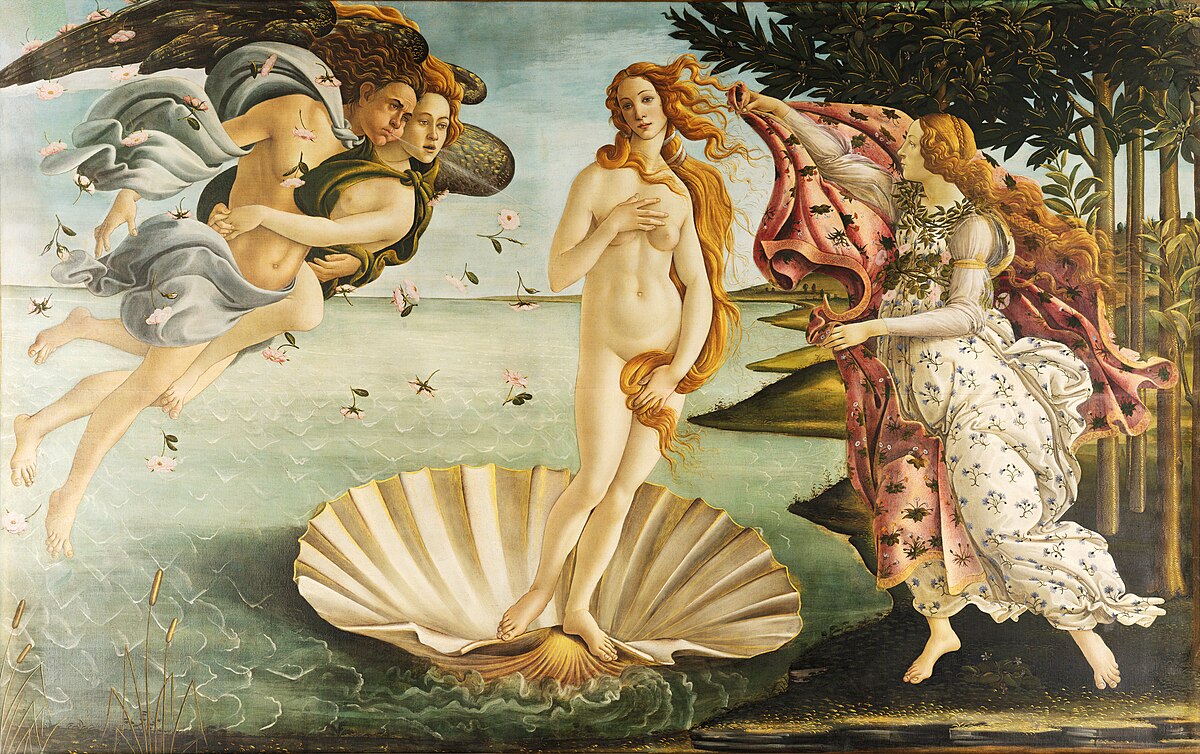
Subject & Iconography: Central nude Venus in modesty pose; Zephyrus and Aura entwined; roses drifting; orange grove referencing Medici patronage.
Formal Analysis: Linear grace, flowing contours, pale cool palette, shallow space, and rhythmic composition emphasize outline over depth.
Materials & Technique: Tempera on canvas allows delicate hatching and lightweight handling; possible gold touches and careful underdrawing.
Function & Context: Likely commissioned for the Medici circle, reflecting humanist taste for classical myth with philosophical overtones.
Style & Period Features: Exemplifies late Quattrocento courtly style with elegant line and Neoplatonic allegory.
Interpretation: Spiritualized beauty leads the viewer from earthly love toward divine contemplation per Neoplatonic thought.
Comparison: Pair with Primavera or later High Renaissance naturalism to contrast linear lyricism with volumetric realism.
Condition/Changes: Cleaned and stabilized; some craquelure but colors remain luminous.
David Donatello
Snapshot: First freestanding nude statue since antiquity, showing David after his victory over Goliath.
Subject & Iconography: Youthful hero wearing laurel hat and boots, sword in hand, standing atop Goliath’s head with a sensual, ambiguous grace.
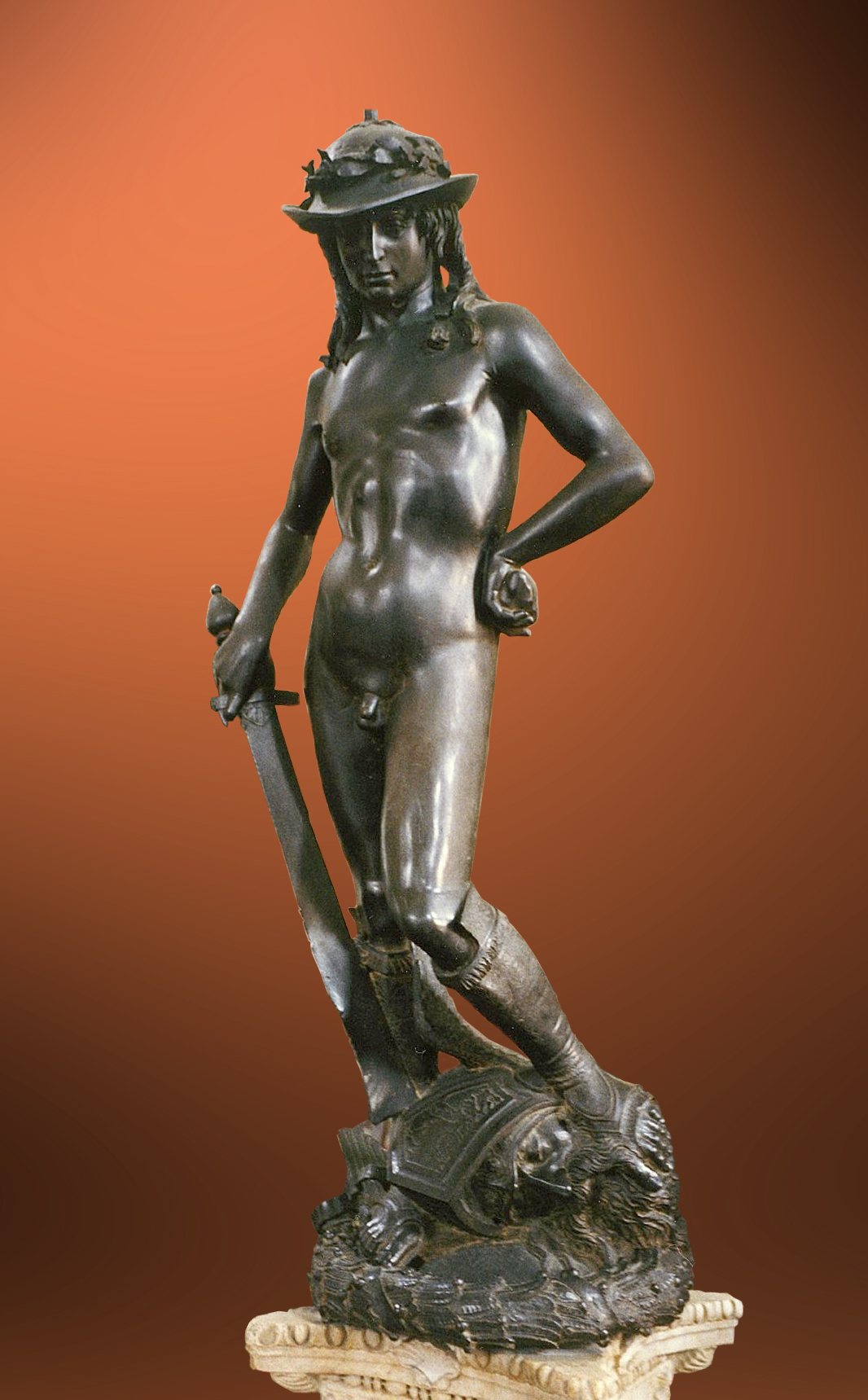
Formal Analysis: Slim proportions, relaxed contrapposto, and open negative space create a poised yet playful stance.
Materials & Technique: Lost-wax bronze casting with chased details and polished surfaces; separate sword and richly modeled curls.
Function & Context: Commissioned for the Medici courtyard as a civic symbol equating David’s triumph with Florence’s republican resilience.
Style & Period Features: Revives classical nude forms and injects psychological nuance typical of the Early Renaissance.
Interpretation: Celebrates God-assisted victory through wit and faith while hinting at Medici power.
Comparison: Contrast with Michelangelo’s monumental David or classical contrapposto figures to explore evolving heroic types.
Condition/Changes: Surface wear and patina adjustments over centuries; minor restorations.
David Michelangelo
Snapshot: Heroic nude of David before battle, symbolizing Florentine liberty and vigilance.
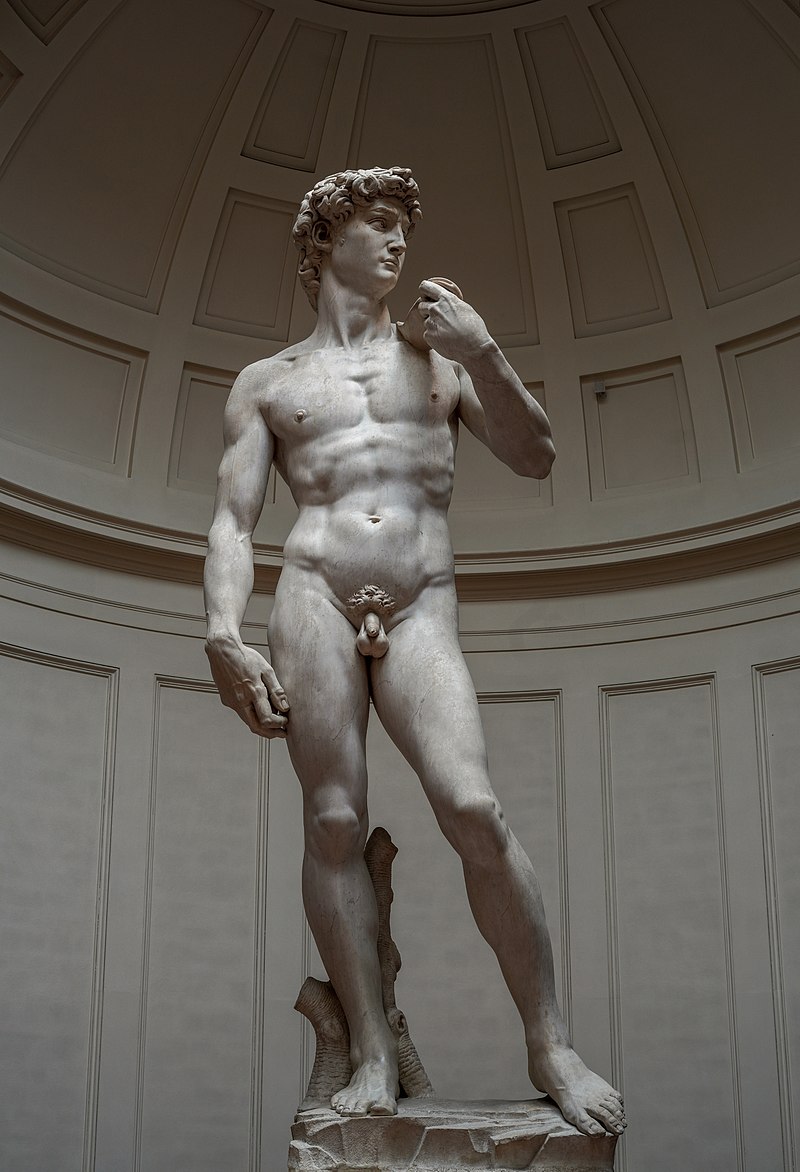
Subject & Iconography: Sling over shoulder, stone in hand, intense gaze toward Goliath’s unseen position; enlarged hands/head adjust for a high viewing point.
Formal Analysis: Monumental contrapposto with sharply defined anatomy and a unified, powerful silhouette.
Materials & Technique: Carved from a flawed marble block abandoned by earlier sculptors; masterful finishing with subtle tool marks.
Function & Context: Commissioned for the cathedral but installed before Palazzo Vecchio in 1504 as a civic emblem.
Style & Period Features: Demonstrates High Renaissance ideal anatomy combined with psychological tension.
Interpretation: Emphasizes courage and reasoned strength granted by God, reflecting Florence’s defiance against powerful enemies.
Comparison: Compare with Donatello’s bronze David or Hellenistic heroes to trace different approaches to the biblical theme.
Condition/Changes: Weathering led to relocation indoors in 1873; ongoing debates surround replicas and conservation.
Lamentation Giotto
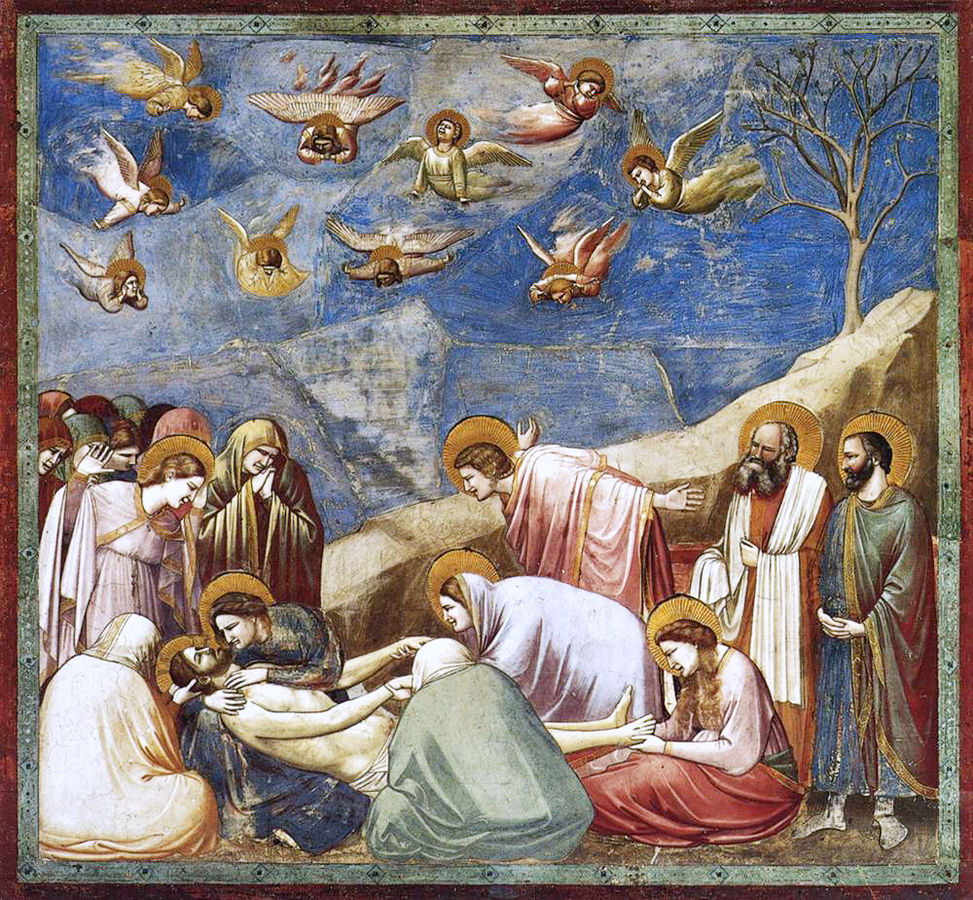
Snapshot: Fresco of mourners gathered around Christ’s body immediately after the Crucifixion, marking a shift toward human emotion.
Subject & Iconography: Mary cradles Christ; angels tumble overhead; rocky ledge directs the eye to the grieving circle.
Formal Analysis: Solid volumes with light-and-shadow modeling, spatial recession, and monumental drapery differentiate figures in space.
Materials & Technique: Buon fresco with some secco details; giornate divisions visible; expensive blue pigments applied carefully.
Function & Context: Commissioned by Enrico Scrovegni as part of a salvation cycle covering the chapel walls.
Style & Period Features: Breaks with Italo-Byzantine flatness, introducing weighty bodies, implied space, and psychological interaction.
Interpretation: Encourages empathetic meditation on Christ’s sacrifice and hope of salvation.
Comparison: Compare with Duccio’s Maestà (Byzantine elegance) or Masaccio’s later realism to trace development.
Condition/Changes: Generally good, though blues show some flaking; conserved extensively.
The Tribute Money Masaccio
Snapshot: Christ directs Peter to find the coin in the fish and pay the tax collector, compressing three Gospel moments into one scene.
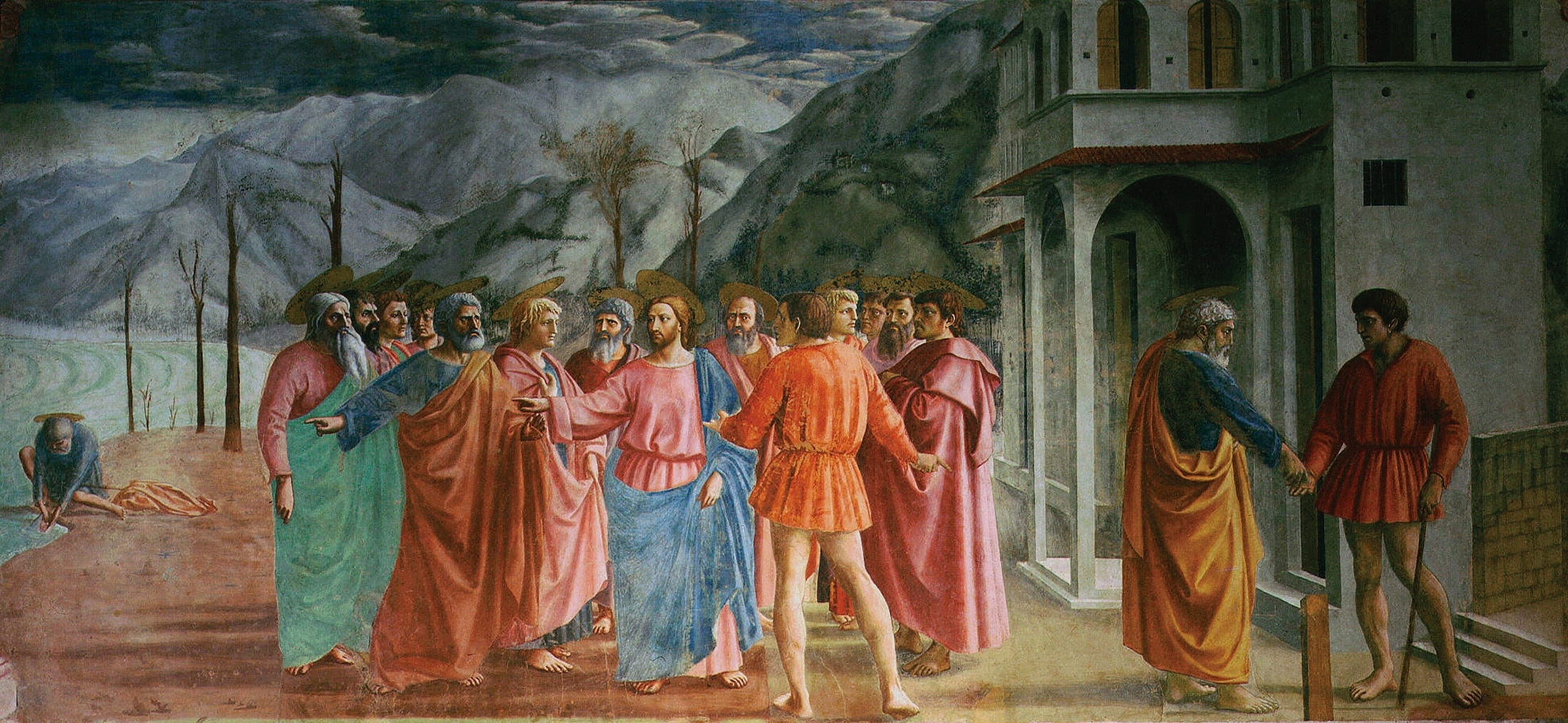
Subject & Iconography: Peter appears three times to narrate the miracle; the tax collector stands at center; classical drapery and halos mark the apostles.
Formal Analysis: Unified one-point perspective with orthogonals converging on Christ; consistent directional light models volumetric figures; atmospheric perspective softens distant mountains.
Materials & Technique: Fresco with careful sinopie drawings; perspective constructed with vanishing point aligned to chapel architecture.
Function & Context: Didactic program for the Carmelite church promoting civic duty and divine provision.
Style & Period Features: Launches Renaissance naturalism through perspective, sculptural light, and human scale.
Interpretation: Underscores balance between spiritual obedience and civic responsibility as God provides the means.
Comparison: Compare with Giotto’s earlier proto-perspective or Leonardo’s mature psychological groupings.
Condition/Changes: Smoke damage restored; colors stabilized with minor losses.
The Last Supper Leonardo da Vinci
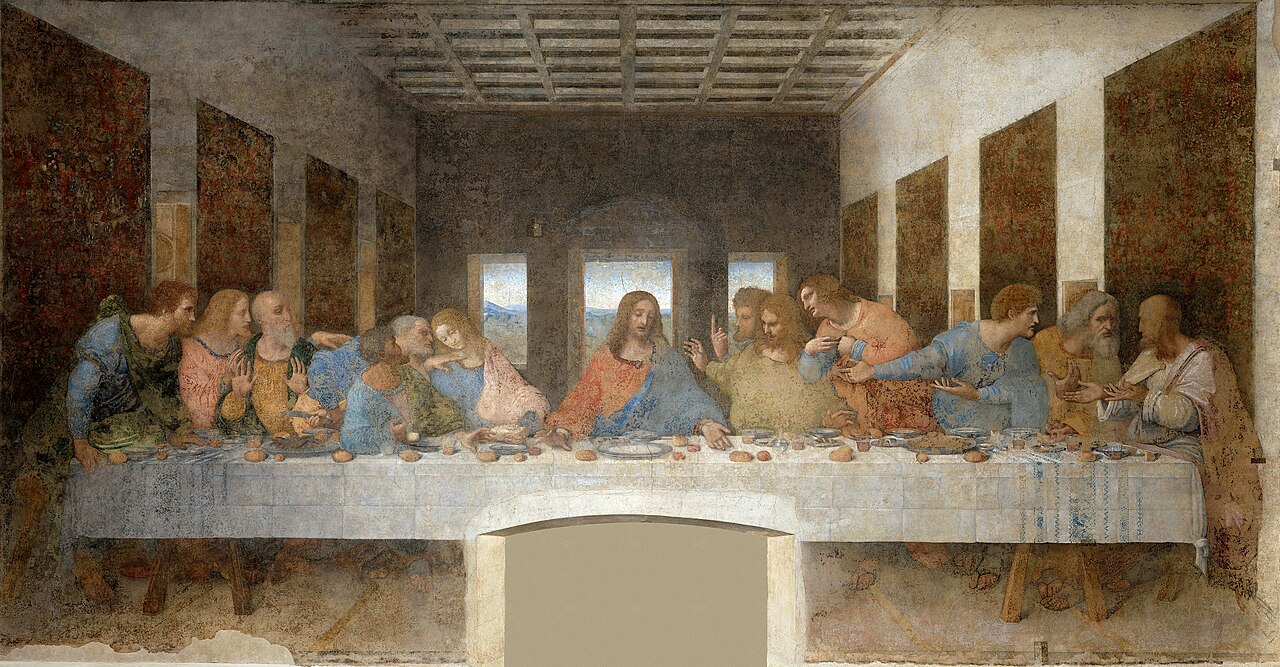
Snapshot: Leonardo freezes the instant Christ announces betrayal in the Dominican refectory of Santa Maria delle Grazie.
Subject & Iconography: Apostles react in groups of three; Judas reaches toward the dish; Peter grips a knife; Christ forms a calm triangle framed by a window halo.
Formal Analysis: One-point perspective converges on Christ’s head; unified light and subtle color harmonies orchestrate psychological drama.
Materials & Technique: Experimental tempera and oil on dry plaster enabled sfumato but caused early deterioration; multiple restorations culminated in a major 1999 conservation.
Function & Context: Served as a meditation on the Eucharist for Dominican monks dining beneath the scene.
Style & Period Features: High Renaissance synthesis of spatial science, anatomy, and expressive gesture.
Interpretation: Explores human responses to divine revelation and the institution of the Eucharist.
Comparison: Compare with Ghirlandaio’s calmer Last Suppers or Caravaggio’s Baroque suppers to track evolving narrative intensity.
Condition/Changes: Much original paint lost; climate-controlled environment now protects the stabilized surface.