
Baroque Art
Caravaggio’s Supper at Emmaus thrusts revelation into candlelit space, Bernini’s Ecstasy of Saint Teresa and St. Peter’s Basilica merge sculpture with stagecraft, and Velázquez’s Las Meninas folds royal spectatorship into the painted court.
Introduction
Characteristics
- A theatrical and sometimes melodramatic style of religious art, commissioned by the Catholic Counter-Reformation and the kings of Europe.
- A new more life-like naturalism in figure compositions.
- A new type of easel art for the prosperous middle class in Protestant Holland. These genre-paintings included still life, portraits, landscapes, etc.
- Influences: Baroque art looked back to the greatness of the High Renaissance and mixed it with the intense emotion and sense of movement from Mannerism.
- Composition: During the Baroque period asymmetrical compositions replaced the clear, symmetrical compositions of the Renaissance. Typical of the Renaissance was a centralised composition based on a triangle, while the spiral composition was characteristic of the Baroque. Baroque art is restless, while the Renaissance is calm.
- Shape: While shapes were clearly defined in the Renaissance, during the Baroque period they ran into each other. The total image is important – foreground and background became one.
- Chiaroscuro: (the balance of light and dark in a painting) Baroque paintings are dramatic with a marked difference between light and dark areas. Paintings are mainly dark with light falling on a few places, like on a stage. Light often falls on one focal point (Rembrandt) or moves freely over shapes illuminating a face or a hand. During the Renaissance every shape was clearly defined.
- A painterly style: Movement was important – the movement of figures (Rubens) or of light (Velazquez). Baroque art demanded a high degree of technical ability.
- Colour: In contrast to the balanced use of colour during the Renaissance, Baroque art has a glowing rich colour.
- Distortions and contortions are common. Figures often in exaggerated poses.
- It is a subjective style where the artist’s opinions and emotions were important.
- Often a deep space in the work.
- Baroque art is theatrical, dramatic and full of movement with open whirling shapes.
- A fleeting moment often used as subject.
- It is still naturalistic and a window upon the world.
- Themes are still often religious, but it became increasingly secular e.g. portraits.
Supper at Emmaus Caravaggio
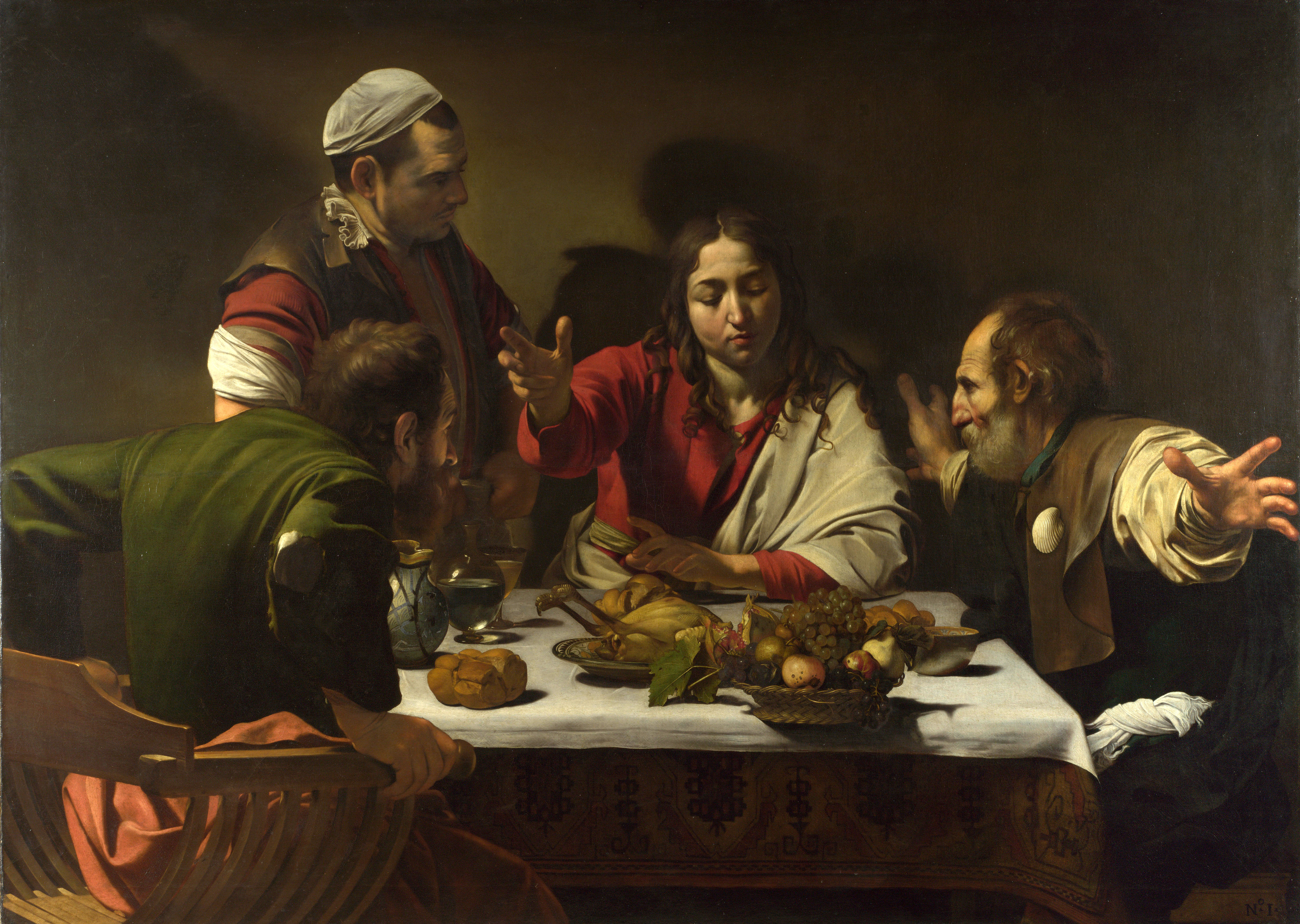
Snapshot: The risen Christ blesses bread as disciples suddenly recognize him, erupting in shock around the table.
Subject & Iconography: Diagonal gestures, blessing hand, pilgrim shell, and humble still-life props root the miracle in ordinary space.
Formal Analysis: Strong diagonals and foreshortening thrust objects toward the viewer; tenebrism isolates figures against darkness.
Materials & Technique: Oil glazes build deep shadows and tactile textures; life models and staged lighting heighten realism.
Function & Context: Counter-Reformation image making sacred revelation immediate, likely for a private patron.
Style & Period Features: Exemplifies Baroque drama, light-dark contrast, and sacred realism.
Interpretation: Emphasizes Eucharistic symbolism and draws viewers into the revelatory moment.
Comparison: Compare with Rembrandt’s quieter suppers or Leonardo’s balanced Last Supper.
Condition/Changes: Generally good; varnish adjustments over time; a calmer second version exists.
The Milkmaid Johannes Vermeer
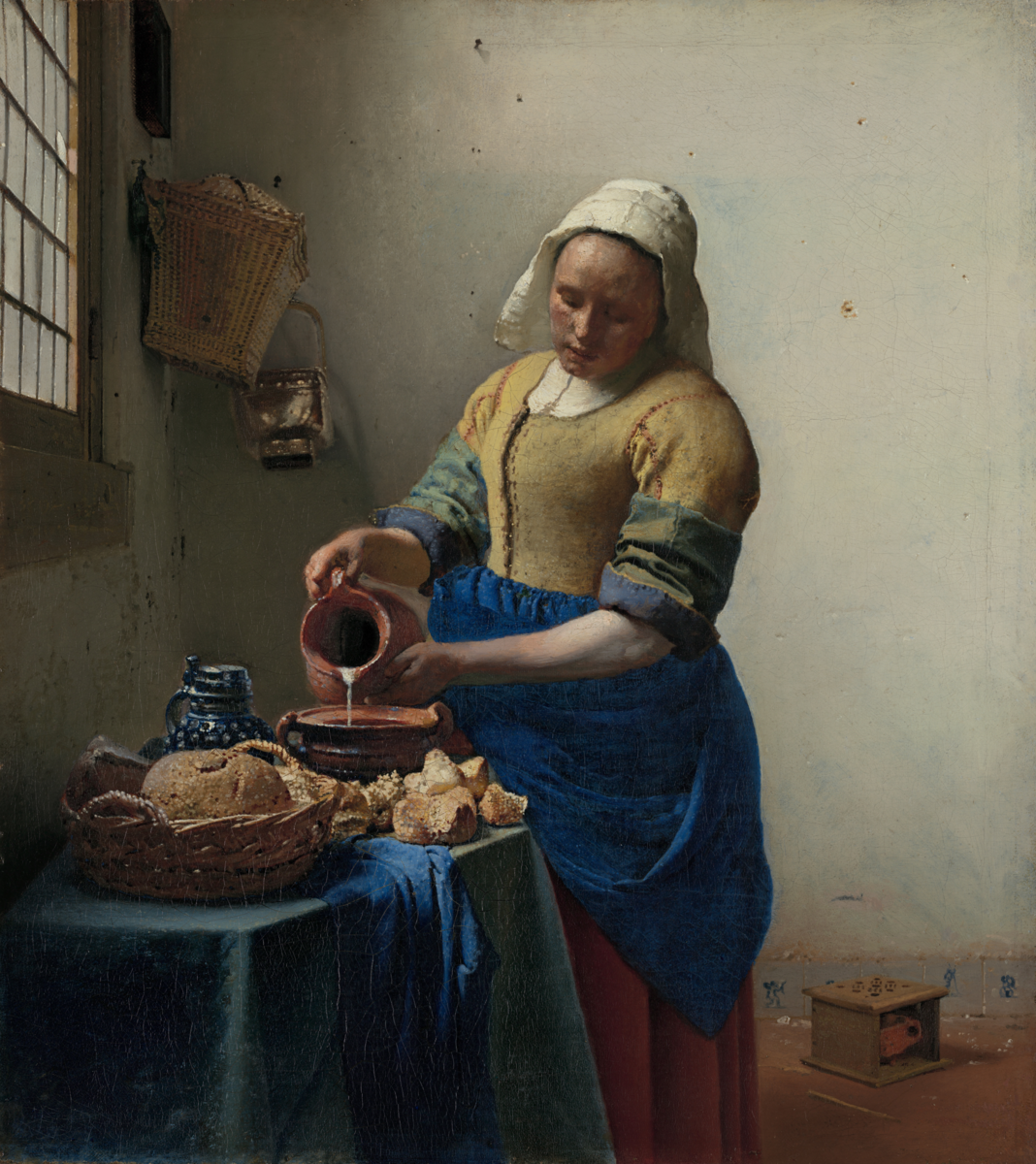
Snapshot: A maid pours milk in a quiet kitchen, turning daily labor into a meditation on light and devotion.
Subject & Iconography: Plain room lit from the left; sturdy woman in blue and yellow; bread, jug, foot warmer, and Delft tiles anchor the domestic setting.
Formal Analysis: Strong raking light models forms; saturated blues and yellows balance the composition; pointillist highlights enliven textures.
Materials & Technique: Multiple glazes and tiny touches suggest optical observation; precise perspective lines the tiles and table.
Function & Context: Genre scene celebrating honest labor and domestic virtue in the Dutch Republic.
Style & Period Features: Baroque realism infused with serenity, limited palette, and luminous light.
Interpretation: Honors dignity in humble work and hints at charity through bread and milk symbolism.
Comparison: Contrast with Caravaggio’s dramatic narratives or Pieter de Hooch’s interiors to show Baroque variety.
Condition/Changes: Excellent condition following cleaning; only minor craquelure.
The Night Watch Rembrandt
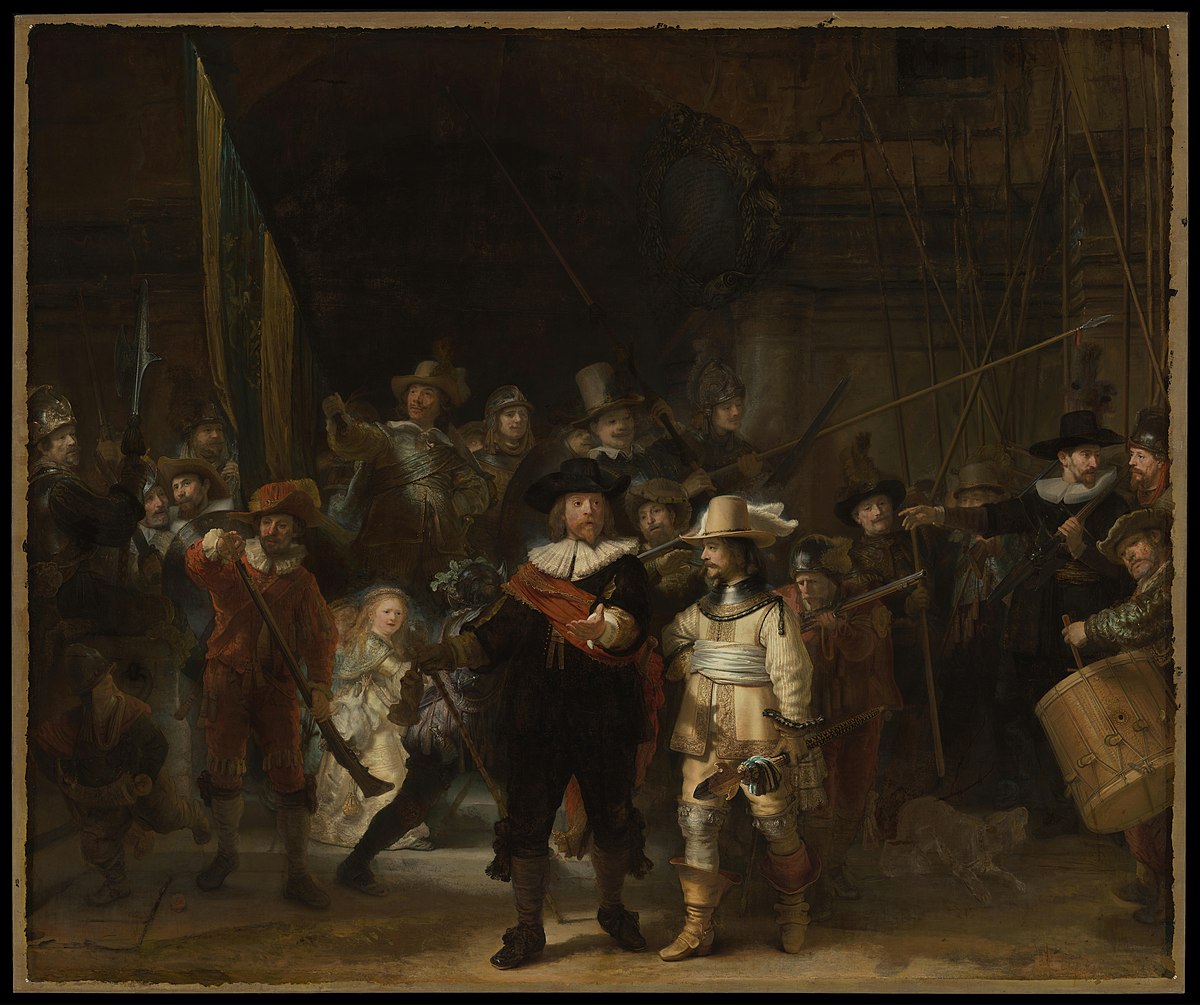
Snapshot: Militia company strides into action, transforming a group portrait into a theatrical narrative.
Subject & Iconography: Captain Frans Banning Cocq leads with lieutenant Willem van Ruytenburch; mysterious illuminated girl carries the company emblem of chicken claws.
Formal Analysis: Dramatic chiaroscuro, sweeping diagonals, and staggered groupings create depth and motion; atmospheric smoke filters the light.
Materials & Technique: Rich layered oils with impasto highlights; life-size figures originally larger before later trimming.
Function & Context: Commissioned as a civic guard portrait for the militia’s headquarters, reinforcing group identity.
Style & Period Features: Dutch Baroque realism fused with theatrical composition, breaking static portrait conventions.
Interpretation: Celebrates civic pride, vigilance, and coordinated action under inspired leadership.
Comparison: Contrast with Frans Hals’ militia portraits or Caravaggio’s light drama to evaluate influences.
Condition/Changes: Trimmed in the 18th century; multiple restorations; ongoing “Operation Night Watch” conservation reveals varnish layers and pigment data.